 |
Information
on gifts of land, sales, tax relief, & more... |
|

Eastern box turtle, an inhabitant of our woodlands. Local populations are threatened
by continued
development.
|
|
|
|
 |
home |
|
Attention
Landowners:
Learn
more about the new State income tax credit (up to $50,000!)
that can result when preserving eligible land with your local
land trust. Also learn about an enhanced federal income tax
deduction incentive for conservation restriction donations
that expires Dec. 31, 2013 unless renewed by Congress.
For a free, confidential
conversation, please contact Mark Robinson, The Compact's
Executive Director, by phone 508-362-2565 or email mark@thecompact.net.
|
About The Compact:
The Compact of Cape Cod Conservation Trusts, Inc. was formed in 1986
as a non-profit service center assisting six local land trusts on
the Lower Cape. The Compact now works with 25 local and regional land
trust and watershed associations on their projects to acquire and
manage important natural areas as protected open space. The Compact
also advises its members on non-profit administration, tax, and legal
questions. Because most local trusts are managed by volunteers, they
find the full-time staff support provided by The Compact crucial to
fulfilling their land conservation goals. As a regional organization,
The Compact also conducts research and promotes land projects that
foster a regional approach to open space protection. The Compact is
supported by dues from member land trusts, donations, and grants from
private foundations.
OUR VISION for Cape Cod:
The Compact of Cape Cod Conservation Trusts believes there is still
an opportunity to preserve the essence of Cape Cod which exists
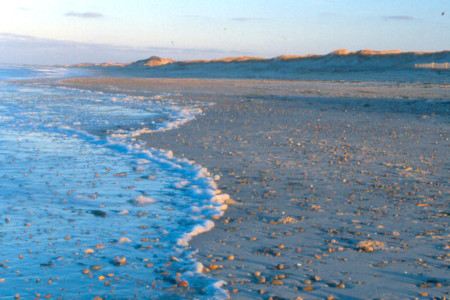
in the collective imagination: a place of white sand beaches, broad
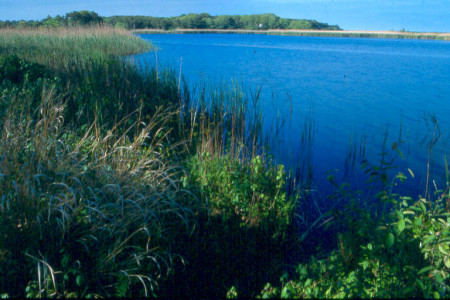
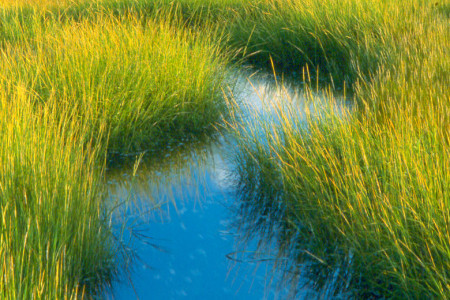
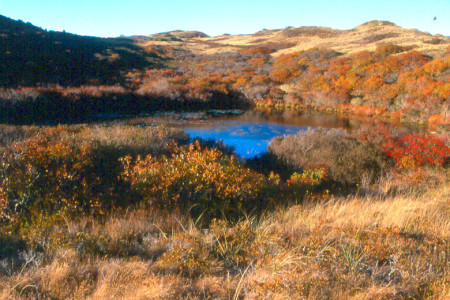
salt marshes, quiet pine woods, intriguing cranberry bogs, and startlingly
blue kettle ponds. Despite rapid and extensive residential and commercial
development, the Cape’s beauty and uniqueness persist, attracting
newcomers and holding those born here.
Land in its natural state provides the resource base for the region’s
environmental and visual quality. Our upland animals, such as deer
and songbirds, need large undeveloped areas to bed down in and migrate
through. Our ground waters need large areas of wood lands and wetlands
to recharge the quantity and filter the quality of our aquifer.
Our fish and shellfish need unpolluted upland buffers to keep their
bays and marshes clean. Our people need woods for walking, unspoiled
vistas for inspiring, and quiet green places for contemplating themselves
and their history.
The Compact seeks to instill and nurture a land conservation ethic
in every Cape Codder. We recognize that, in the absence of individual
and collective action, every parcel of open space will be developed
on Cape Cod. The result will be an unlivable, unsustainable region.
To save our open space we need a comprehensive approach, from decisions
made by individuals to partnerships among government agencies and
non-profit organizations. The Compact was founded to assist those
making simple and complex decisions about how and why land should
be preserved.
The effort of the land trusts of The Compact is a significant supplement
to the work of government in protecting open space, but it is not
a substitute. The enormity of the problem and the high cost of land
on Cape Cod require concerted action. Public dollars and private
ingenuity can often be the right recipe for success. The fate of
the last 17% of the Cape’s land mass that is still undecided (neither
developed nor protected) hangs in the balance.
Staff:
| Mark H. Robinson |
Executive Director |
| Michael W. Lach |
Assistant Director |
| Paula S. Pariseau |
Senior Land Protection Specialist |
|
Officers:
Richard A. Johnston, Esq.
(Dennis) |
President |
Colin A. Leonard
(Harwich) |
Vice President |
Henry A. Lind
(Eastham) |
Treasurer |
Elizabeth Finch
(Brewster) |
Clerk |
|
|